
A Practical Guide to Cybersecurity Audits in Daytona Beach
Learn what a cybersecurity audit should cover for Daytona Beach businesses, from risk reviews to practical fixes and follow-up planning.
Published on · Craig Wheeler · How this article was made
A cybersecurity audit is not just a technical checklist. It is a structured review of how your business protects systems, data, accounts, vendors, and day-to-day operations. For companies in Daytona Beach, that review matters whether you run a professional office near International Speedway Boulevard, support guests and transactions in the beachside hospitality corridor, or manage a growing healthcare, legal, retail, or logistics operation.
Daytona Beach has a business mix that creates a wide range of security needs. Hospitality businesses often handle payment data and third-party booking tools. Healthcare and professional firms manage sensitive records and email-heavy workflows. Retailers and event-driven businesses may rely on seasonal staffing, shared devices, and point-of-sale systems. A good audit helps you see where those realities create risk, and what to do next.
Why an audit matters before a problem happens
Many companies only look closely at security after a scare, a vendor questionnaire, or a compliance request. That is understandable, but it is not ideal. By the time a problem is visible, the underlying weakness may have been there for months.
A cybersecurity audit gives you a clearer picture of your current environment. It helps answer practical questions:
- Who has access to critical systems and why?
- Are former employees fully removed from accounts and devices?
- Is multi-factor authentication enabled where it should be?
- Are backups tested, not just configured?
- Are laptops, phones, servers, and cloud apps being monitored consistently?
- Could a phishing email or weak password expose customer or financial data?
The value is not just finding issues. It is creating a prioritized plan so your business can improve security without wasting time or budget on the wrong fixes.
What a strong cybersecurity audit should include
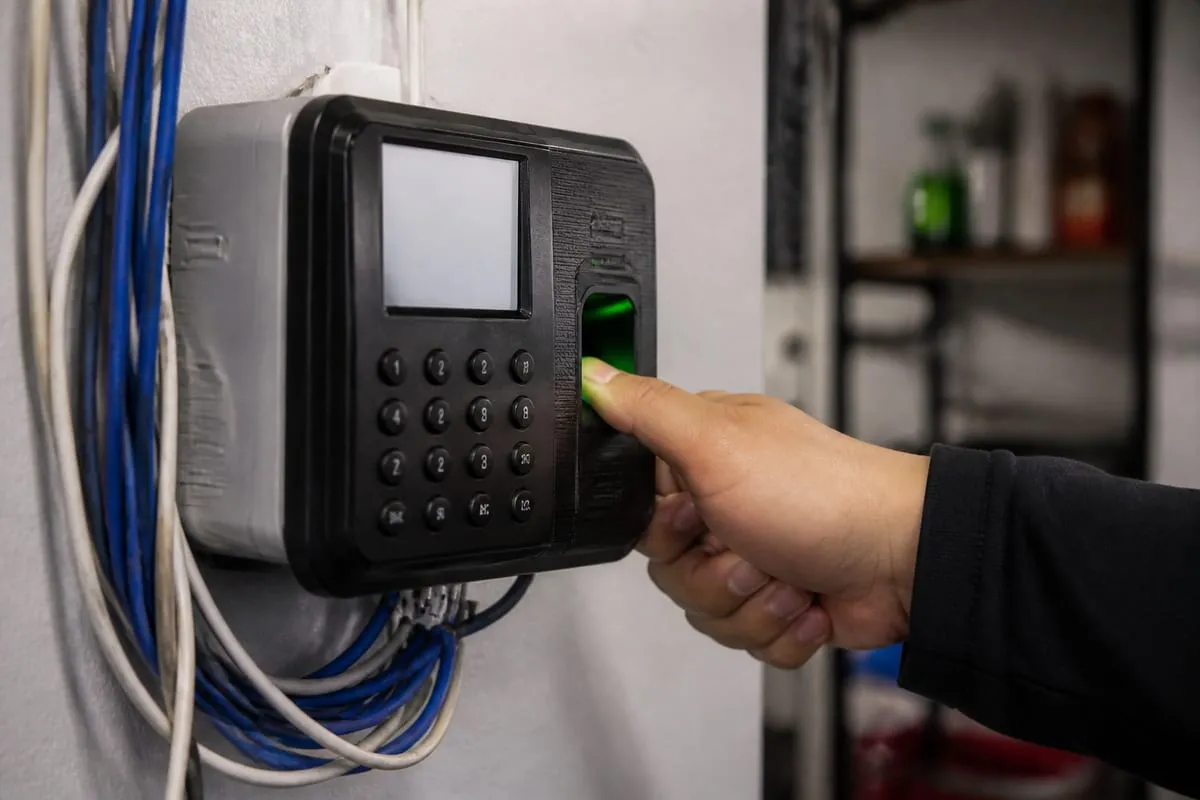
A useful audit looks beyond antivirus status or a basic vulnerability scan. It should review the full picture of how your business operates.
Access and identity controls
This part focuses on user accounts, passwords, multi-factor authentication, privileged access, and how employees log in to systems. In many businesses, access grows over time without enough cleanup. Staff change roles, shared accounts linger, and old permissions remain in place.
A good audit checks whether access matches actual job needs and whether basic protections are enforced consistently.
Devices, servers, and network visibility
Every connected device can become a security gap if it is unmanaged or out of date. The audit should identify workstations, laptops, mobile devices, servers, firewalls, wireless networks, and any shadow IT that has appeared outside formal approval.
This is also where monitoring matters. If your team does not know what is on the network, it is much harder to protect it. Businesses that need better visibility often pair an audit with IT Monitoring Services to keep watch over systems after the initial review.
Email, cloud platforms, and collaboration tools
For many companies, email is still the most common path for attacks. Cloud storage, file sharing, and collaboration tools also deserve close review. The audit should examine mailbox security, phishing protections, sharing settings, account recovery options, and administrator controls across cloud platforms.
This area is especially important for organizations with remote staff, mobile managers, or multiple locations.
Backup and recovery readiness
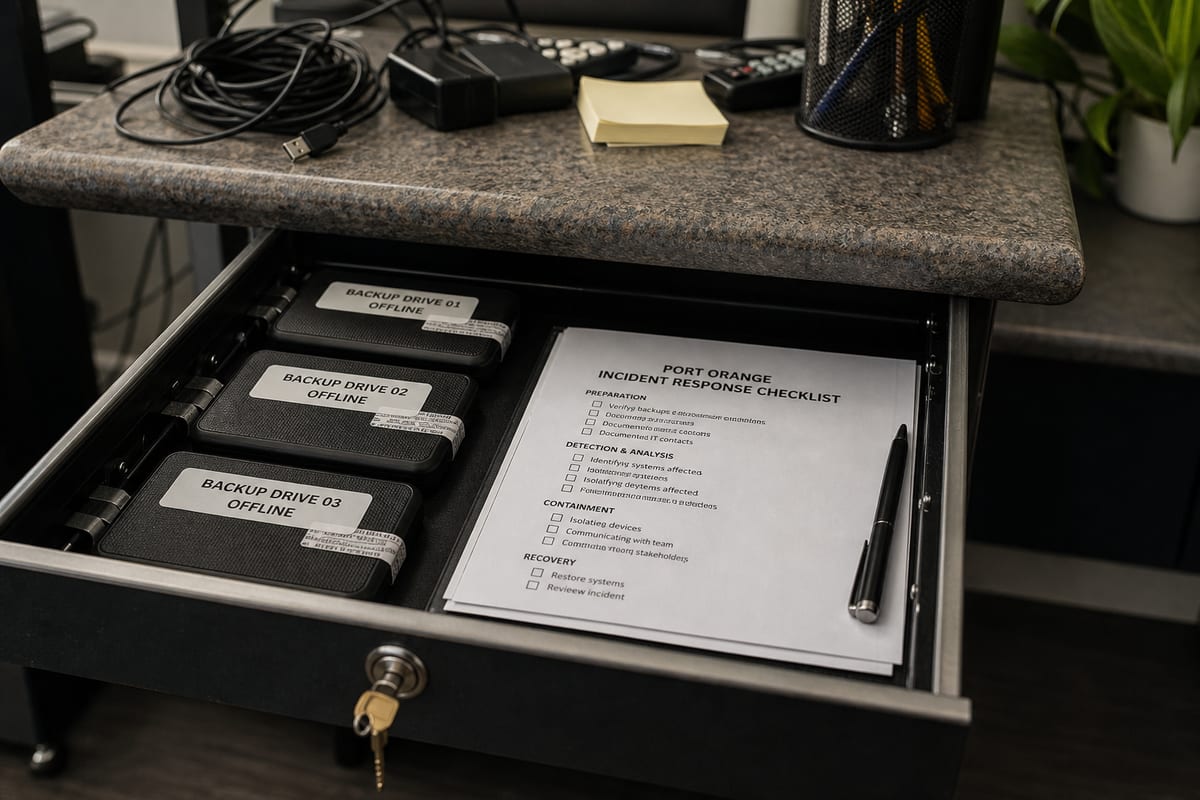
Backups are only useful if they are protected, recent, and recoverable. A proper audit reviews backup scope, retention, encryption, access controls, and testing practices. It should also ask a simple but important question: if a key system failed tomorrow, how long would it really take to restore business operations?
Policies, training, and real-world habits
Security is not only about tools. It is also about how people work. The audit should look at onboarding and offboarding, password practices, vendor approvals, remote access rules, incident reporting, and employee awareness.
In Daytona Beach, businesses that bring on temporary or part-time workers during busy tourism periods can face added account management challenges. If access is granted quickly but not reviewed carefully, risk grows quietly in the background.
Common issues audits uncover
Most audits do not reveal one dramatic flaw. More often, they uncover a pattern of smaller issues that create larger exposure together.
Some of the most common findings include:
- Shared logins for critical systems
- Missing multi-factor authentication on email or remote access
- Inactive accounts that were never disabled
- Devices without current patching or endpoint protection
- Weak backup testing practices
- Overly broad file-sharing permissions
- Limited logging or alerting for suspicious activity
- Third-party vendors with more access than necessary
- Security policies that exist on paper but are not followed in practice
These problems are common because businesses are busy. Systems evolve, teams change, and technology gets added faster than it gets reviewed. An audit creates the pause needed to clean that up.
A practical process for Daytona Beach businesses
Not every company needs the same depth of review, but the process should still be methodical.
Start with business priorities
Before diving into tools, identify what matters most. That may include payment systems, client records, scheduling platforms, email, line-of-business applications, or cloud file storage. If an outage or breach hit one of those areas, what would the business impact be?
This step keeps the audit grounded in operational reality instead of turning it into a generic technical exercise.
Review the environment as it exists today
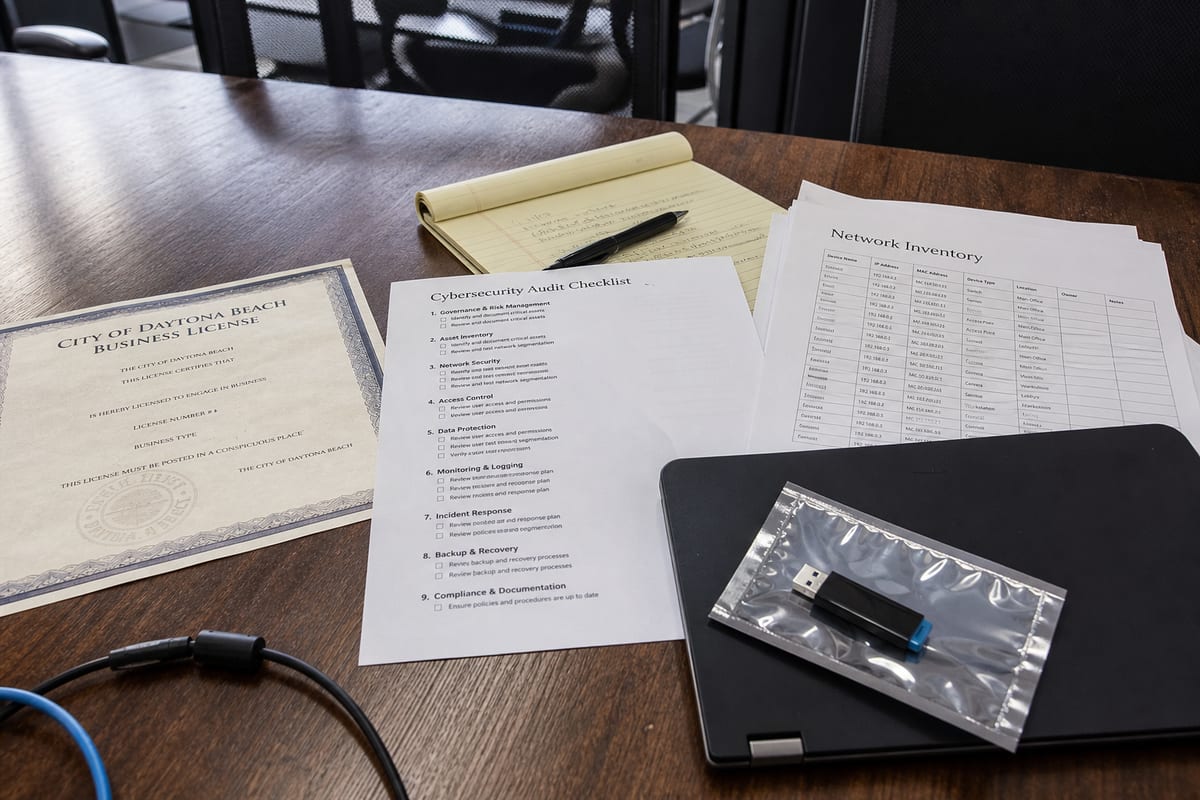
An audit should account for your actual setup, not an idealized diagram from years ago. That means reviewing current users, devices, vendors, internet connections, wireless networks, remote access methods, and cloud services.
For businesses near major event areas around Daytona International Speedway, where staffing, transactions, and vendor activity can ramp up during race weeks and large gatherings, this real-world review is especially important. Temporary changes in operations often create lasting security gaps if nobody circles back afterward.
Rank findings by risk and effort
Once issues are identified, they should be organized into clear priorities. Some fixes are urgent and relatively simple, like enabling multi-factor authentication or disabling stale accounts. Others may require planning, such as redesigning network segmentation or formalizing vendor access controls.
A strong audit report should help leadership understand both risk and next steps, without forcing them to decode overly technical language.
Build a roadmap, not just a report
The best audit is one that leads to action. That means creating a realistic remediation plan with owners, timelines, and follow-up reviews. If you are evaluating your current posture, our cybersecurity audit services can help turn findings into a practical improvement plan.
Preparing for an audit without overcomplicating it
You do not need a perfect environment before scheduling an audit. In fact, waiting for everything to be organized usually delays useful progress.
A few steps can make the process smoother:
- Gather a list of core systems and software
- Identify who manages vendors, internet, and cloud platforms
- Document any recent incidents or recurring concerns
- Note compliance requirements, if any
- Be honest about workarounds employees use every day
That last point matters. Real habits often reveal more risk than formal documentation does.
Choosing the right audit partner
A cybersecurity audit should leave you better informed, not overwhelmed. Look for a partner who can explain findings in business terms, identify practical priorities, and avoid fear-based recommendations.
You also want someone who understands that different businesses in Daytona Beach face different pressures. A medical office, a law firm, a marina-related operation, and a hotel group will not share the same risk profile, even if they use some of the same technology.
If you are not sure where to begin, a cybersecurity strategy call can help clarify your goals before a full review starts.
FAQ
How often should a business get a cybersecurity audit?
At least annually is a good baseline for many organizations. You should also consider an audit after major technology changes, leadership changes, rapid growth, or a security incident.
Is a cybersecurity audit only for larger companies?
No. Smaller businesses are often more exposed because they have fewer internal resources and less formal oversight. An audit helps businesses of any size understand their actual risk.
Will an audit disrupt daily operations?
A well-run audit is typically designed to minimize disruption. Some parts involve documentation and interviews, while technical review work can often be scheduled carefully around business needs.
Does an audit fix security problems automatically?
No. An audit identifies gaps and priorities. The real value comes from acting on the findings and improving controls over time.
Can an audit help with insurance or compliance requirements?
Yes, in many cases. A solid audit can help you understand where your current practices align with vendor, insurance, or regulatory expectations, and where more work is needed.
Cybersecurity audits work best when they are practical, honest, and tied to how your business really runs. The goal is not to create extra paperwork. It is to reduce risk, improve resilience, and give you a clearer view of where your defenses stand today.
If your business in Daytona Beach has grown, added new tools, or simply has not reviewed security in a while, this is a smart time to take a closer look. A focused audit can uncover manageable issues before they become expensive ones.
Contact us today for expert cybersecurity audit services!