
7 Reasons Daytona Beach Businesses Should Schedule a Network Security Assessment
Learn how a network security assessment helps Daytona Beach businesses find risks, strengthen defenses, and plan smarter IT decisions.
Published on · Craig Wheeler · How this article was made
A network security assessment gives you a clear picture of how well your business is actually protected, not how protected you assume it is. For many companies, that difference matters. Firewalls get installed, antivirus gets renewed, and passwords get updated, yet important gaps still go unnoticed.
In Daytona Beach, that risk is easy to underestimate. Many local organizations operate with a mix of office systems, guest Wi-Fi, cloud apps, remote access, payment tools, cameras, and connected devices spread across more than one site. A business near International Speedway Boulevard may have very different traffic patterns and technology demands than a professional office closer to the beachside area, but both can end up with the same problem, limited visibility into what is connected, what is exposed, and what needs attention first.
A strong assessment is not just about looking for dramatic hacks. It is about understanding your environment, identifying weak points, and building a realistic plan to improve security without disrupting daily work.
More than a quick scan
Some business owners hear the word assessment and think of an automated tool that spits out a report full of technical warnings. Useful tools are part of the process, but a good assessment goes further.
It should review the structure of your network, how users access systems, how devices are secured, where sensitive data may be exposed, and whether your current protections match the way your team actually works. That includes basics like password policies and patching, but also bigger-picture issues like network segmentation, vendor access, wireless security, backup protection, and visibility across cloud-connected systems.
If you want a broader review of your current environment, a cybersecurity risk assessment can help uncover gaps that are easy to miss when you are focused on day-to-day operations.
1. You cannot protect what you have not fully mapped
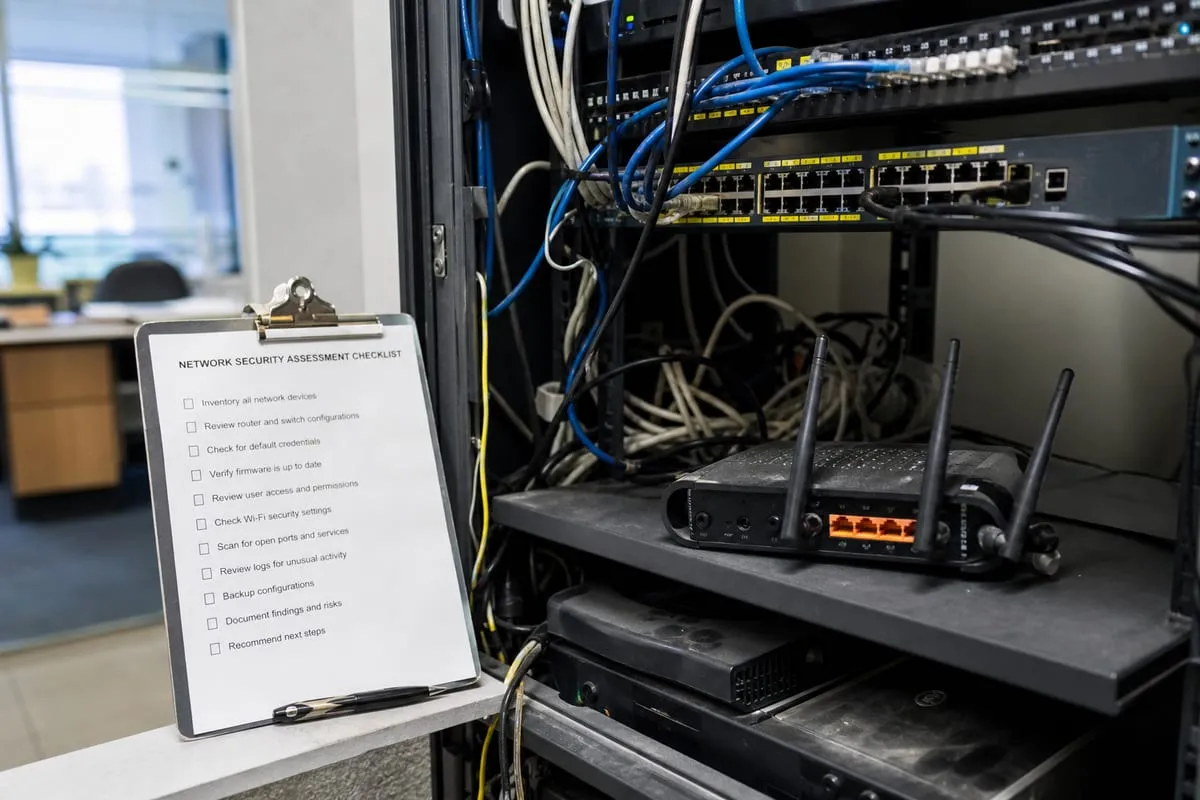
One of the most common findings in a network security assessment is simple, businesses often do not have a complete inventory of devices, systems, and connections.
Over time, networks grow in uneven ways. A printer gets added in one office. A contractor receives remote access. An old switch stays in place because it still works. Someone installs a wireless access point to improve coverage in a dead zone. None of these decisions seem major on their own, but together they create blind spots.
An assessment helps identify:
- Unknown or unmanaged devices
- Outdated hardware and firmware
- Open ports and unnecessary services
- Weak internal network separation
- Legacy user accounts and forgotten permissions
Before you can improve security, you need an accurate map of what is there.
2. Local businesses often have more exposure than they realize
Daytona Beach has a distinctive business mix. Hospitality, healthcare, retail, professional services, automotive operations, and event-driven commerce all play a visible role in the local economy. Businesses that support visitors, racing events, or high-volume customer traffic often rely on public-facing systems, guest networks, point-of-sale tools, and third-party platforms that expand the attack surface.
That does not mean every company has the same level of risk. It does mean many organizations have more entry points than they think. A restaurant with guest Wi-Fi, a medical office with connected imaging devices, or a professional firm with hybrid staff all need to understand how those systems interact.
A network security assessment helps separate perceived risk from actual risk so you can focus on the issues that matter most.
3. Small weaknesses can lead to bigger business problems
Not every network issue leads to a headline-making breach. More often, weak security shows up as downtime, account compromise, unstable remote access, ransomware spread, or unauthorized access to shared files.
A few examples include:
- A flat network allows malware to move farther than it should
- Old firewall rules leave unnecessary pathways open
- Shared credentials make it hard to track who accessed what
- Unsecured wireless networks expose internal systems
- Missing updates leave known vulnerabilities unpatched
These are not rare or exotic problems. They are the kinds of issues that develop quietly and stay in place until something goes wrong.
4. Compliance is easier when you know your starting point
Many businesses need to think about regulatory or contractual requirements, even if they do not consider themselves heavily regulated. Payment processing, healthcare data, insurance expectations, vendor security questionnaires, and client contract requirements can all bring cybersecurity into the conversation.
An assessment does not automatically make you compliant, but it helps establish where your controls stand today. That makes it easier to prioritize improvements, document progress, and prepare for future reviews.
For organizations that need help turning findings into an action plan, a security strategy call can be a practical next step.
5. Remote work and cloud tools changed the network edge
A lot of businesses still think about network security in terms of the office firewall. That is no longer enough.
Today, users connect from home, on the road, from mobile devices, and through cloud platforms that may never touch the local server room. Email, file sharing, collaboration tools, line-of-business apps, and remote support platforms all affect your security posture.
A useful assessment looks at those realities. It asks questions like:
- Who can access company systems remotely?
- Are remote connections protected with multifactor authentication?
- Do employees use managed devices?
- Are cloud applications configured securely?
- Can you detect suspicious access quickly?
When the network edge has expanded, your assessment needs to reflect that.
6. Better security decisions save money over time
Many companies overspend in some areas and underspend in others. They may buy overlapping tools, renew services they barely use, or delay upgrades that actually matter more than new software.
A network security assessment helps you make decisions based on evidence. Instead of guessing, you can prioritize the changes that reduce risk most effectively. That may mean replacing aging hardware, tightening access controls, improving monitoring, or redesigning part of the network for better separation and resilience.
If your environment also needs day-to-day infrastructure help, network support services can make it easier to maintain improvements after the assessment is complete.
7. The best time for an assessment is before a problem forces it
Many businesses schedule a review only after a scare, suspicious activity, repeated outages, failed compliance checks, or an insurance requirement. By that point, the process feels urgent and reactive.
A better approach is to assess your environment before you are under pressure. That gives you time to fix issues in an orderly way, budget for upgrades, and reduce risk without rushing important decisions.
A proactive review also helps leadership teams answer practical questions with confidence. Are we exposed in ways we do not understand? Are our current tools enough? If something happened tomorrow, would we know where the weak points were?
What a strong assessment should include
Not every provider takes the same approach. A thorough network security assessment should usually include a combination of technical review, configuration analysis, risk identification, and practical recommendations.
Look for an assessment that covers:
- Firewall and router configuration review
- Internal and external vulnerability scanning
- Wireless security evaluation
- User access and privilege review
- Network segmentation and device visibility
- Patch and firmware status
- Remote access methods and safeguards
- Backup security considerations
- Prioritized findings with business-focused recommendations
The final report should be understandable, not just technical. You should come away knowing what the main risks are, which ones need immediate action, and which improvements can be planned over time.
FAQ
How often should a business schedule a network security assessment?
At least annually is a good baseline for many organizations. You should also consider one after major infrastructure changes, office moves, mergers, compliance changes, or a security incident.
Is a network security assessment only for larger companies?
No. Smaller businesses are often more vulnerable because they have fewer internal resources and less visibility into their systems. An assessment helps businesses of any size understand and reduce risk.
Will an assessment disrupt normal operations?
A professionally planned assessment is usually designed to minimize disruption. Some testing and review can happen with little impact, though timing should always be coordinated around critical business functions.
What is the difference between an assessment and ongoing monitoring?
An assessment is a point-in-time review of your current security posture. Ongoing monitoring helps watch for issues continuously. Both are valuable, but they serve different purposes.
A network security assessment is one of the clearest ways to understand where your business stands today. It turns vague concerns into specific findings and helps you make smarter decisions about protection, priorities, and future investments.
If your business in Daytona Beach depends on reliable systems, secure access, and uninterrupted operations, this kind of review is not just a technical exercise. It is a practical step toward reducing avoidable risk and strengthening the foundation your team depends on every day.
Contact us today for expert network security assessment services!