
The Case for Network Support in Port Orange That Matches the Way Local Businesses Operate
Compare reactive fixes, fully managed oversight, and hybrid network support options for businesses in Port Orange.
Published on · Craig Wheeler · How this article was made
When business owners think about network support, they often picture outages, slow internet, or a Wi-Fi complaint from the front office. Those issues matter, but the bigger question is usually this: what kind of support model actually fits the way your business runs in Port Orange?
That answer is not the same for every company. A medical office near Dunlawton Avenue, a marina-adjacent business along the Halifax River, and a multi-site contractor serving the Daytona Beach area all depend on stable connectivity, but they do not need the same level of planning, monitoring, or response.
This is where it helps to compare approaches instead of assuming there is one right answer. The best network support setup is the one that reduces disruption, fits your budget, and keeps your team productive without adding unnecessary complexity.
Reactive help versus proactive oversight
The most common comparison is break-fix support versus ongoing management.
With reactive support, you call when something stops working. That can make sense for very small organizations with simple setups, limited devices, and a high tolerance for occasional downtime. If your network is basically one internet connection, a basic firewall, and a handful of workstations, paying only when there is a problem may feel efficient.
The tradeoff is unpredictability. Problems rarely happen at convenient times, and reactive support usually starts after users are already affected. Slow switches, overloaded wireless access points, failing cabling, and misconfigured guest networks often build up quietly before they become obvious. By the time someone investigates, your team may already be losing hours.
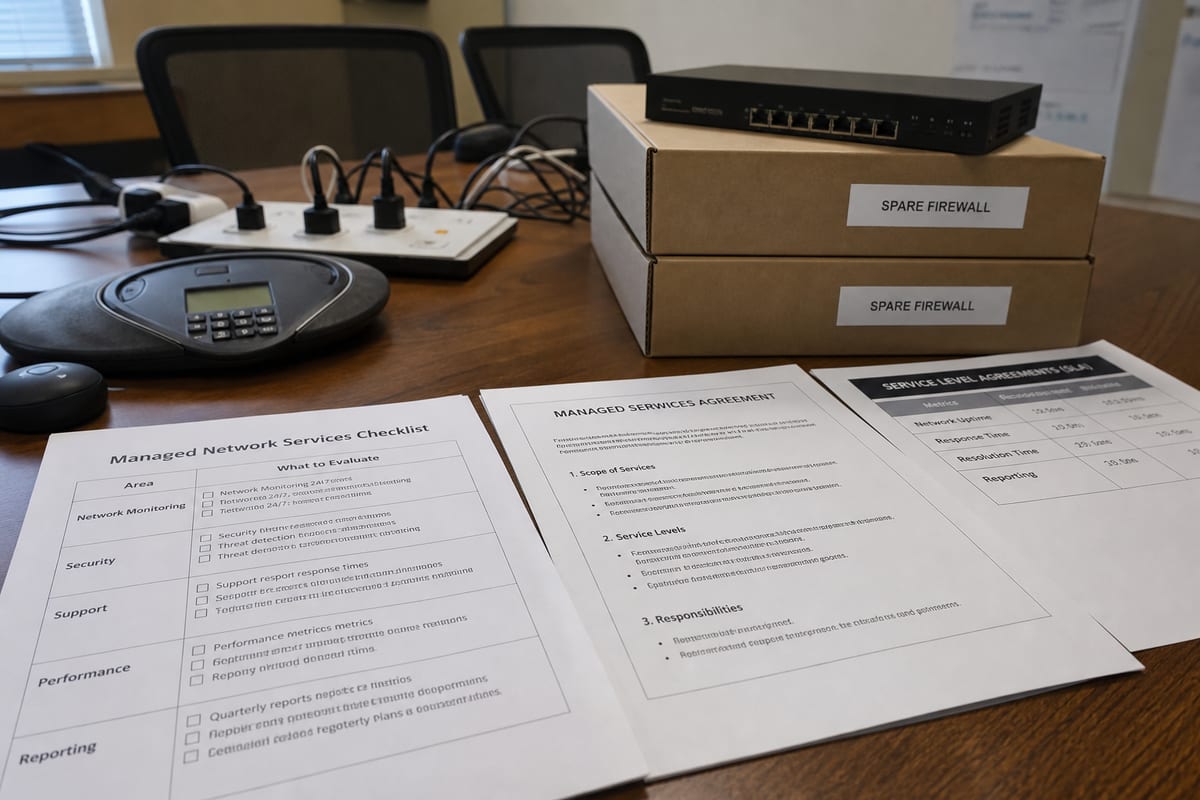
Proactive support takes the opposite approach. Instead of waiting for a complaint, your provider monitors performance, reviews device health, tracks recurring issues, and plans around growth. That often means catching warning signs early, before a dropped VPN tunnel or unstable wireless connection turns into a business interruption. For companies that rely on cloud apps, VoIP phones, security cameras, or multiple locations, this approach is usually easier to live with day to day.
For businesses weighing long-term reliability, Network Support Services can make more sense than repeated emergency calls, especially when recurring issues are tied to design problems rather than one-off failures.
On-site familiarity or remote efficiency?
Another useful comparison is local, hands-on support versus mostly remote service.
Remote support is fast for many common issues. Configuration changes, firmware checks, VPN troubleshooting, user access adjustments, and performance review can often be handled without waiting for a technician to drive out. That speed matters when your staff needs answers now, not tomorrow.
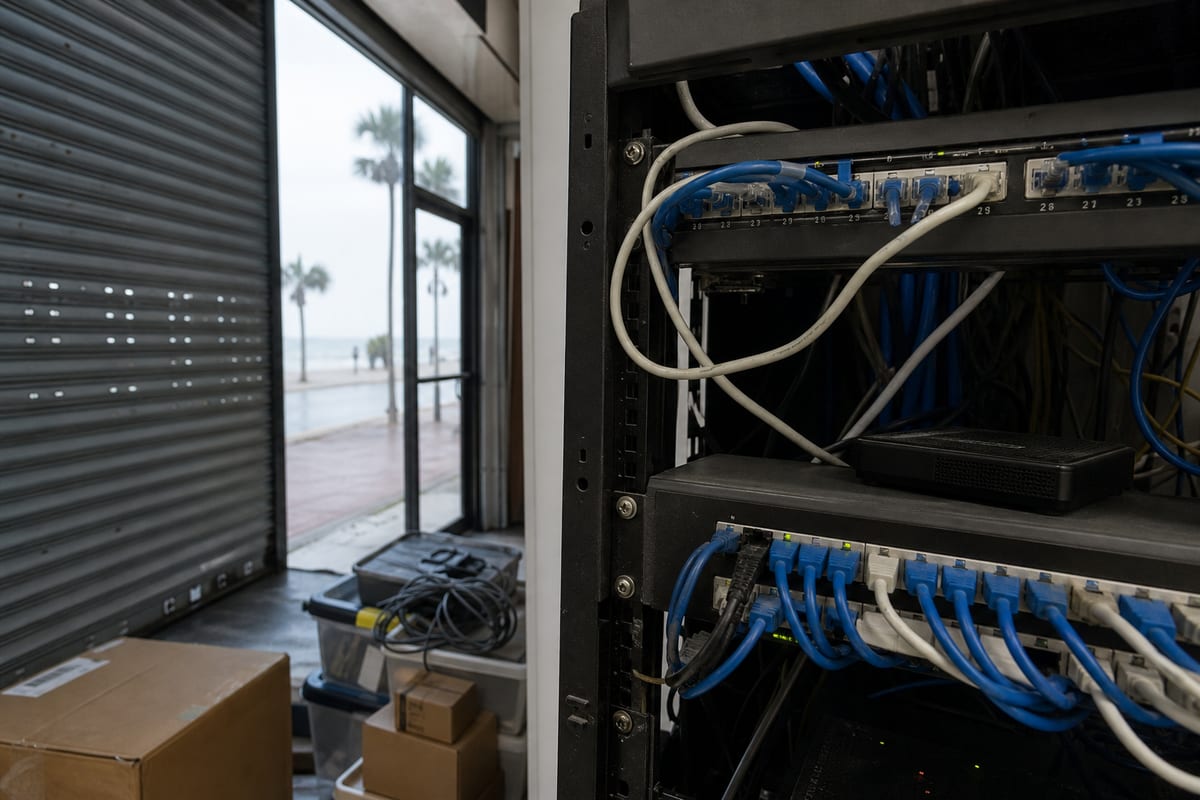
But on-site familiarity still counts. In Port Orange, many businesses operate in a mix of retail plazas, professional offices, and light commercial spaces where networking problems are not always visible from a dashboard. Wireless dead zones can be caused by building layout. Cabling may have been added in phases over the years. A network closet may look organized until someone traces what is actually plugged into what.
This is especially relevant in a city shaped by both major east-west corridors like Dunlawton Avenue and neighborhoods that stretch toward the river, where older and newer commercial buildouts can create very different infrastructure realities. A support partner who understands the local building mix is often better equipped to spot why one location has chronic Wi-Fi complaints while another struggles with device handoffs or camera bandwidth.
The strongest option is often a blend of both, remote response for speed, plus local availability when physical troubleshooting or planning is needed.
Standardized networks or tailored design
Some providers lead with a standard package. Others build around the actual needs of the business.
Standardization has real benefits. It simplifies support, shortens troubleshooting time, and helps keep equipment consistent. If you run a straightforward office environment, a proven template for firewalls, switching, wireless coverage, and segmentation may be exactly what you need.
The downside appears when a business has special requirements. A dental office handling imaging, a property management company with multiple connected sites, or a shop relying on point-of-sale systems, cameras, and guest Wi-Fi all place different demands on the network. In those cases, a one-size-fits-all design can leave gaps. You may end up with weak wireless coverage in critical areas, too little redundancy, or no meaningful separation between business systems and guest traffic.
Tailored design takes more planning up front, but it can prevent expensive workarounds later. It also matters when network decisions affect regulated data handling, documentation, or access controls. If your environment touches sensitive records, it may be worth aligning network decisions with broader compliance support instead of treating connectivity as a separate issue.
In-house responsibility or outside partnership
Some Port Orange businesses prefer to keep network responsibility internal. Others want a partner to own more of the day-to-day burden.
An internal approach gives you direct control. If you already have capable staff who understand your environment, that can work well. Internal teams often know which departments are most sensitive to outages, which applications create traffic spikes, and where past infrastructure shortcuts are still causing trouble.
The challenge is bandwidth, in both senses of the word. Network support is rarely just about internet access. It includes patching, hardware lifecycle planning, firewall review, wireless optimization, vendor coordination, documentation, and user-impact triage. For a small internal team, those tasks compete with every other IT responsibility.
An outside partner can absorb that operational load and bring broader experience from other environments throughout the Daytona Beach area. That does not mean giving up control. In a good partnership, your business sets priorities and risk tolerance, while the provider handles the monitoring, maintenance, and escalation process. If your company already has internal staff, co-managed support can be a practical middle ground.
For teams that need broader day-to-day technical help beyond the network itself, IT support services may complement network work without forcing everything into a single rigid model.
Cheap now or stable later
Cost conversations often focus too narrowly on the monthly number. A better comparison is short-term savings versus long-term stability.
A lower-cost setup may seem attractive if it avoids major upfront work. But if that approach leaves you with aging switches, weak wireless coverage, undocumented changes, or no meaningful monitoring, the hidden costs show up elsewhere. Staff loses time. Customer-facing systems slow down. Small issues keep resurfacing. Leadership ends up making decisions based on frustration instead of planning.
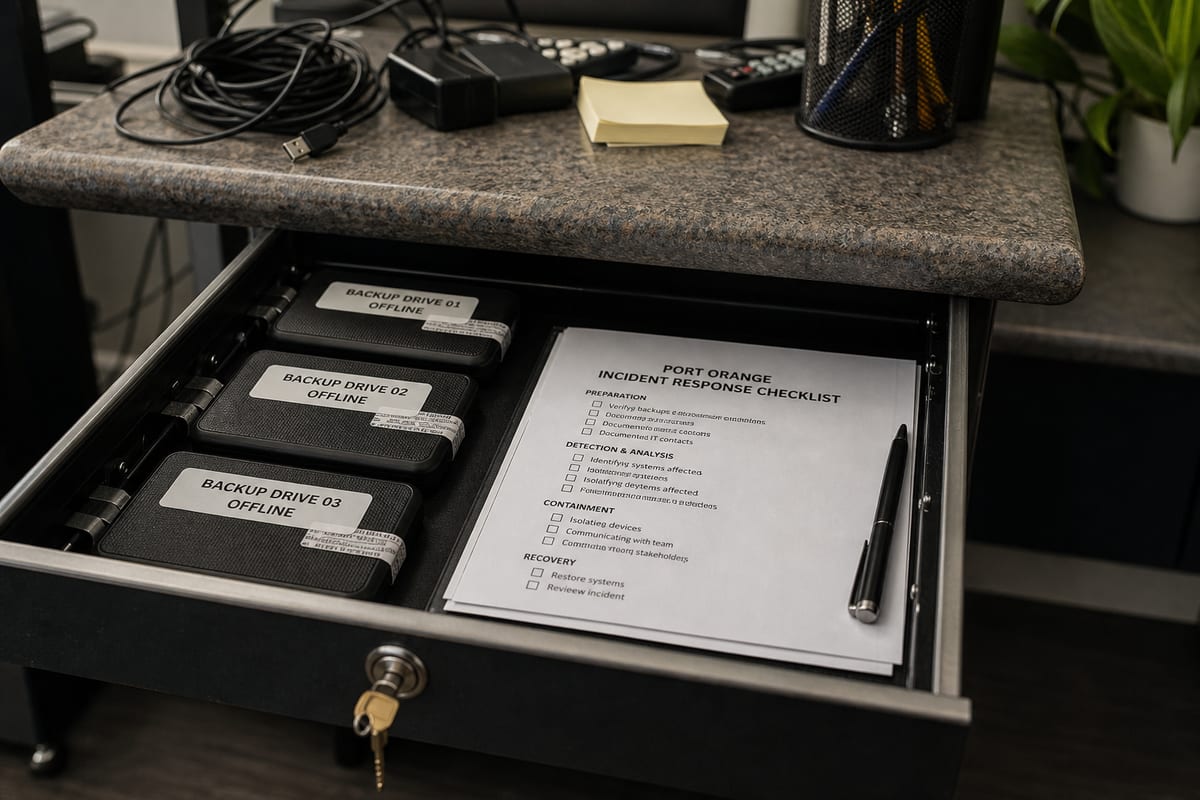
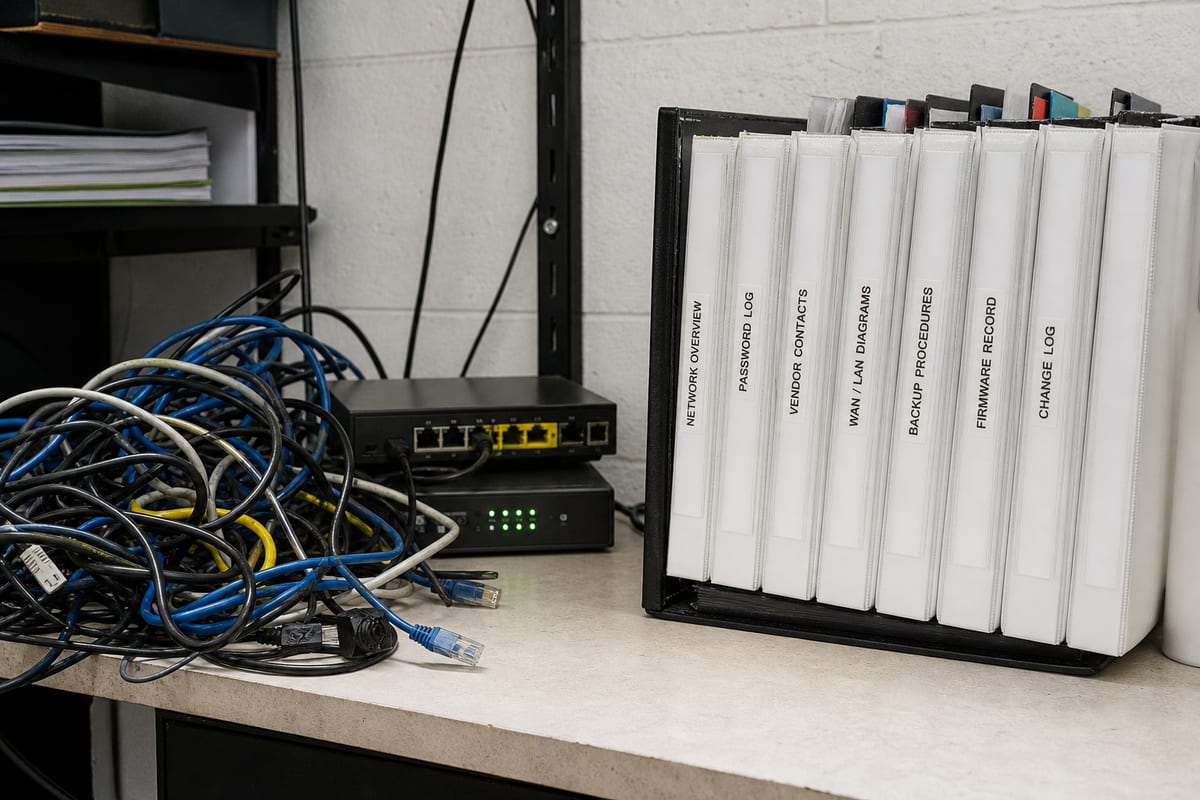
A more mature support model can cost more on paper while reducing waste in practice. Better visibility leads to fewer surprises. Better documentation shortens recovery time. Better design reduces recurring tickets. Over time, those gains often matter more than the difference between a cheap plan and a thoughtful one.
That is one reason many businesses move from ad hoc troubleshooting to ongoing network support once they see how much productivity is tied to infrastructure that users barely notice until it fails.
Choosing the right fit for your business in Port Orange
If your environment is simple and downtime is tolerable, reactive support may still be enough. If your business depends on cloud platforms, phones, cameras, remote access, or multiple vendors, proactive support usually delivers a better experience. If you have internal IT, co-managed service may be the right balance. If you do not, a provider with both remote capability and local familiarity can close important gaps.
The key is not choosing the most advanced option by default. It is choosing the level of support that matches your operations, your risk tolerance, and the real-world demands of your location and industry.
In Port Orange, that often means looking beyond the internet circuit itself and asking harder questions about coverage, segmentation, documentation, resilience, and how quickly issues can be solved when your team is trying to work.
The right network support approach should make your business feel easier to run, not more technical. When the network is designed and supported well, your staff spends less time dealing with friction and more time serving customers.
If you are weighing your options in Port Orange, talk to our team about network support built around how your business actually runs.