
7 Reasons Daytona Beach Businesses Need Stronger Endpoint Detection and Response
Learn how endpoint detection and response helps Daytona Beach businesses detect threats faster, contain attacks, and stay resilient.
Published on · Craig Wheeler · How this article was made
Endpoint detection and response, often shortened to EDR, helps businesses spot suspicious activity on laptops, desktops, servers, and other devices before a small issue turns into a serious security incident. For companies in Daytona Beach, that matters because modern work happens across many endpoints at once, from office PCs to remote employee laptops to mobile devices used on the go.
Whether you run a professional office near International Speedway Boulevard, support guests in the hospitality sector, or manage a healthcare, retail, or automotive business tied to the activity around Daytona International Speedway and the broader tourism economy, your endpoints are where many attacks begin. Email phishing, stolen passwords, malicious downloads, and unpatched software often land on a single device first. EDR is designed to catch that early.
1. Antivirus alone is no longer enough
Traditional antivirus still has value, but it mainly looks for known threats. Many real-world attacks do not arrive as obvious malware files anymore. They may use legitimate tools, compromised accounts, or scripts that blend in with normal activity.
EDR adds visibility and context. Instead of only asking, “Is this file bad?” it also asks, “Is this device behaving in a risky way?” That makes it easier to catch unusual login patterns, suspicious PowerShell use, ransomware-like file changes, or software trying to move laterally through your environment.
For organizations that want deeper, ongoing protection, managed detection and response services can add expert monitoring and investigation on top of endpoint tools.
2. Faster detection reduces business disruption

The longer a threat stays unnoticed, the more damage it can do. A compromised endpoint can become the starting point for data theft, downtime, and expensive recovery work.
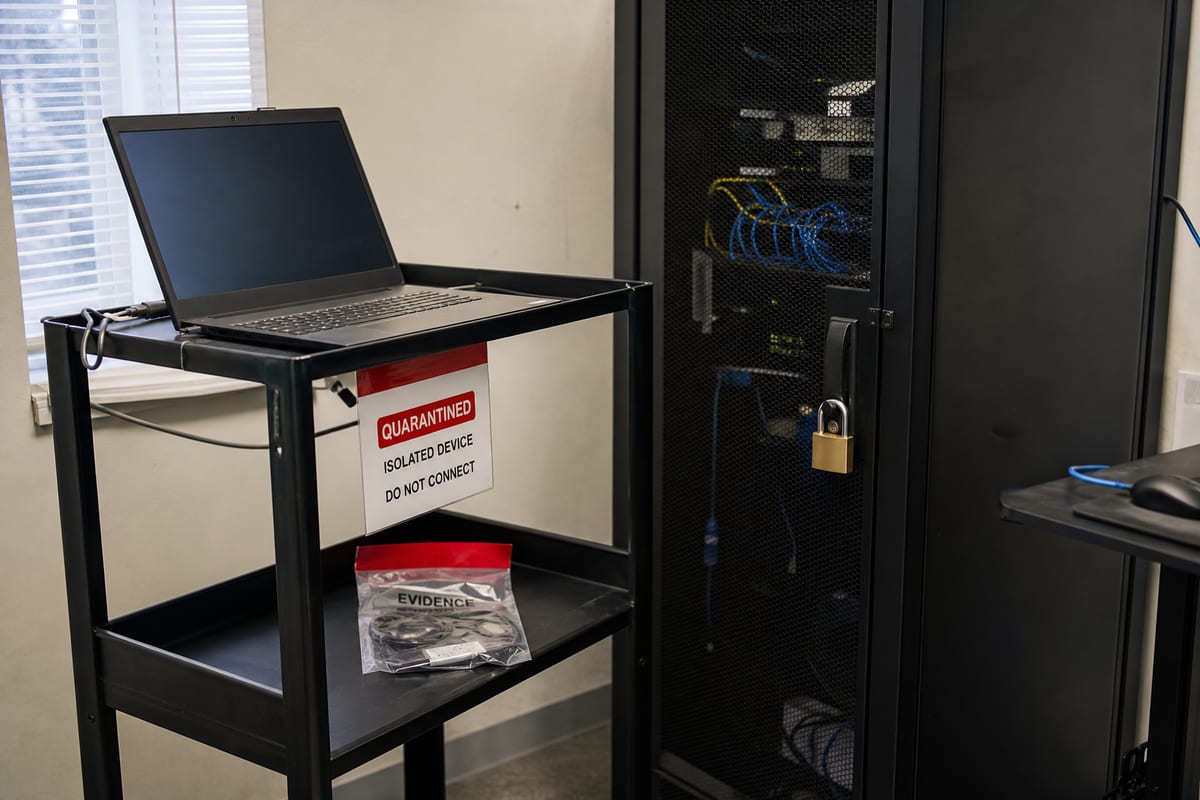
A strong EDR platform helps shorten that window. It can alert on suspicious behavior quickly, isolate an affected device, and preserve evidence for investigation. That speed matters if an employee clicks a phishing link, installs a fake browser extension, or logs in from a compromised machine.
For many businesses in Daytona Beach, even a short outage can create ripple effects across staff, customers, vendors, and daily operations. Quick containment helps keep one bad endpoint from becoming a company-wide problem.
3. Remote and hybrid work increase endpoint risk
Business devices are no longer used only inside the office. Employees work from home, travel, and connect from different networks throughout the day. Every one of those devices becomes a potential entry point.
That is one reason EDR has become such an important part of modern cybersecurity. It follows activity at the device level, even when the user is outside your main office. If a laptop is exposed on public Wi-Fi, starts running suspicious processes, or shows signs of credential theft, your team can respond without waiting for the device to return onsite.
This is especially useful when paired with broader IT monitoring services, which help businesses keep track of system health and issues beyond endpoint threats.
4. Better visibility helps teams make smarter decisions
One of the biggest cybersecurity challenges for small and midsize businesses is not just stopping threats, it is understanding what is happening across the environment. Without good visibility, teams are often left guessing.
EDR creates a clearer picture. It records device activity, highlights suspicious behavior, and gives investigators a timeline of what happened before, during, and after an alert. That makes it easier to answer practical questions:
- Which device was affected?
- What user was involved?
- Did the threat spread?
- Was sensitive data accessed?
- What should be remediated next?
This kind of visibility supports better incident response, better communication with leadership, and better long-term security planning.
5. Daytona Beach businesses often rely on uptime and trust
Many local organizations depend on uninterrupted service and customer confidence. In Daytona Beach, that can include hospitality groups, medical practices, professional services firms, retailers, and businesses connected to events that bring heavy visitor traffic to the area. When systems go down or customer data is put at risk, the impact is not just technical. It affects reputation, scheduling, revenue, and client relationships.
EDR helps protect that trust by improving your ability to detect suspicious activity early and respond in a controlled way. Instead of discovering a problem after files are encrypted or accounts are misused, you have a better chance of catching warning signs sooner.
If your internal team is stretched thin, our Daytona Beach team can help you evaluate whether your current endpoint protections are giving you the visibility and response capability you actually need.
6. Response matters just as much as detection
Detecting a threat is only the first step. The real question is what happens next.
A useful EDR strategy should include clear actions for triage, containment, investigation, and recovery. That may involve isolating a device, disabling a compromised account, removing persistence mechanisms, checking for lateral movement, and documenting the incident for future improvements.
This is where many businesses discover a gap. They may have security tools installed, but no one is actively reviewing alerts or responding with urgency. A flood of notifications without a response plan can create a false sense of security.
That is why many organizations choose 24/7 threat monitoring support instead of relying on software alone. The combination of technology and experienced analysts often leads to better outcomes than a tool that is left to run unattended.
7. EDR supports a more mature security program
Endpoint protection should not exist in isolation. It works best as part of a broader security approach that includes patching, access controls, employee awareness training, backups, and documented response procedures.
EDR strengthens that overall program by helping you validate whether other controls are working. If an attacker bypasses email filtering, abuses a user account, or exploits an unpatched application, endpoint telemetry can reveal the activity quickly. That insight helps you improve not just one device, but your larger security posture.
For growing businesses, this can be a practical step toward more mature operations without having to build a full in-house security team from scratch.
Choosing the right approach for your business
Not every company needs the same EDR setup. A small office with a limited number of devices may need a simpler deployment and outside monitoring. A larger organization with compliance requirements, multiple locations, or sensitive data may need deeper integrations and more formal response workflows.
When evaluating options, it helps to ask:
- Who reviews alerts, and how quickly?
- Can suspicious devices be isolated remotely?
- How long is endpoint activity retained for investigations?
- Will the platform help detect ransomware behavior, credential abuse, and unusual scripting?
- How does EDR fit with your existing security tools and IT processes?
The best solution is the one your business can actually operate well, not the one with the longest feature list.
FAQ
Is endpoint detection and response the same as antivirus?
No. Antivirus mainly focuses on identifying known malicious files. EDR goes further by monitoring device behavior, investigating suspicious activity, and helping contain threats when something unusual happens.
Do small businesses in Daytona Beach really need EDR?
In many cases, yes. Small businesses are still targeted by phishing, ransomware, and account compromise. If your team relies on computers, email, cloud apps, or remote access, endpoint security deserves serious attention.
Can EDR help stop ransomware?
It can help detect behaviors commonly associated with ransomware, such as unusual encryption activity, suspicious scripts, or attempts to disable security tools. No tool can guarantee prevention in every case, but EDR can improve early detection and containment.
What kinds of devices should be covered?
At a minimum, businesses should consider laptops, desktops, and servers. Depending on your environment, that may also include remote devices and systems used by mobile employees.
Do we need in-house security staff to use EDR effectively?
Not always. Some businesses manage it internally, but many benefit from outside monitoring and response support so alerts are reviewed consistently and action can be taken quickly.
Strong endpoint security is no longer just a concern for large enterprises. If your business depends on connected devices, cloud apps, employee mobility, and uninterrupted operations, endpoint detection and response can play a major role in reducing risk.
The key is not just installing another tool. It is making sure the technology, monitoring, and response process all work together in a way that fits your business.
If you are unsure whether your current protections are enough, now is a good time to take a closer look. Contact us today for expert endpoint detection and response services!