

The Case for Stronger Cybersecurity in Volusia County
Learn why practical cybersecurity matters for organizations in Volusia County, and how to reduce risk with smarter local planning.
Published on · Craig Wheeler

Cybersecurity is easy to treat like a problem for big cities, large hospitals, or national corporations. In reality, local organizations in Volusia County face many of the same threats, just with smaller teams, tighter budgets, and less room for error.
A phishing email that slips past a busy office manager, a weak password reused across systems, or an unpatched firewall can interrupt operations fast. For a medical office in DeLand, a marina business near New Smyrna Beach, or a professional firm serving clients in Daytona Beach, the damage is not abstract. It can mean downtime, lost revenue, exposure of private data, and a hard hit to customer trust.
What makes the local picture unique is the county’s mix of industries and institutions. Volusia County is home to tourism and hospitality tied to Daytona Beach, healthcare providers, city and county services, manufacturers, retail businesses, and education connected to Embry-Riddle in Daytona Beach and Stetson in DeLand. That variety creates a wider attack surface because different organizations rely on very different systems, vendors, devices, and compliance requirements.
Why local organizations are attractive targets
Many small and midsize organizations assume attackers only go after the biggest names. That is one of the most common and costly misunderstandings in cybersecurity.
Attackers often prefer organizations that are easier to breach. A local accounting office, contractor, nonprofit, or multi-location retailer may hold financial records, employee data, payment information, and access to cloud systems, but may not have a dedicated internal security team. That combination makes them appealing.
In Volusia County, this challenge is amplified by the number of organizations that depend on seasonal staffing, distributed locations, shared devices, or third-party vendors. A hotel group, property management company, or healthcare practice may have many people accessing systems every day, which increases the chance of accidental clicks, password problems, and permission gaps.
The threats that matter most right now
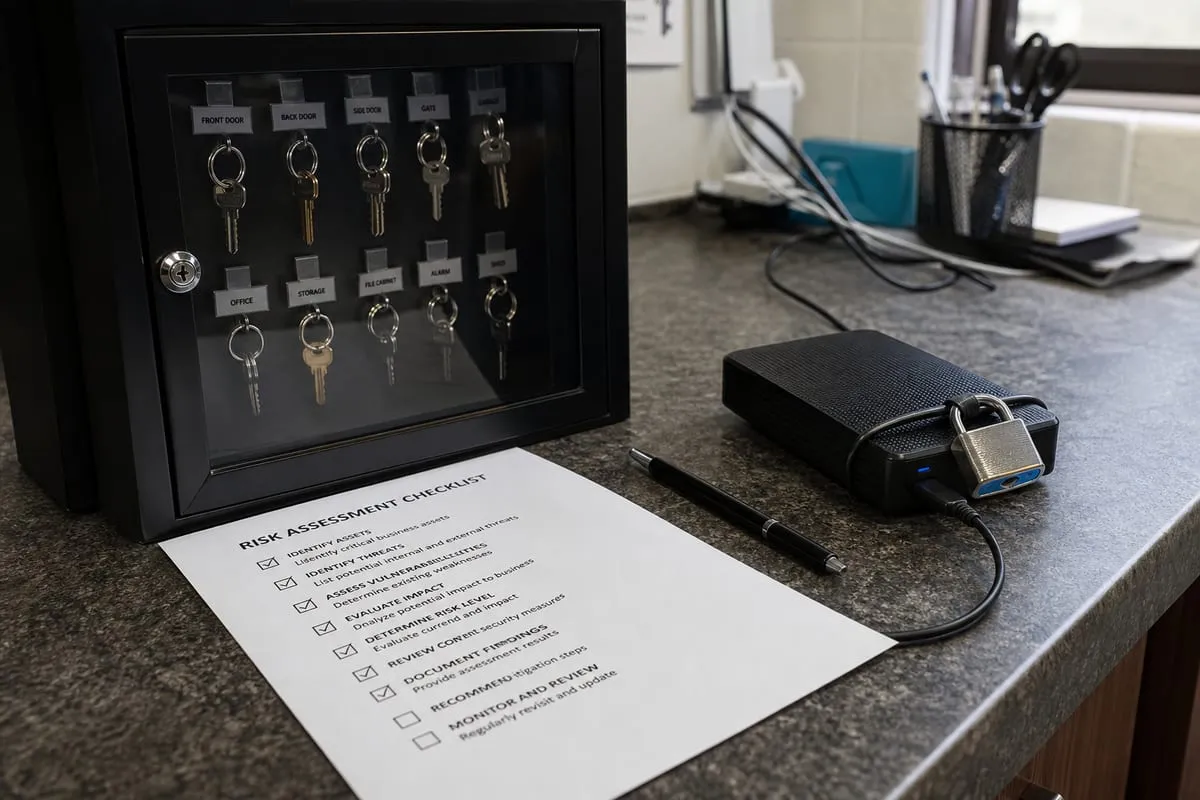
The most important cybersecurity risks are usually not the most dramatic ones. They are the everyday threats that repeatedly work.
Phishing and business email compromise
Email remains one of the easiest ways into a business. A convincing message can impersonate a vendor, a manager, a bank, or a shipping provider. If an employee enters credentials or approves a fraudulent payment, the impact can be immediate.
This is especially dangerous for organizations that process invoices, coordinate bookings, manage payroll, or handle wire transfers.
Ransomware
Ransomware can lock files, disrupt scheduling, and halt access to critical systems. Recovery is rarely simple. Even if backups exist, businesses still face downtime, cleanup costs, and the work of rebuilding trust.
Weak identity security
Many breaches start with compromised passwords. Reused credentials, missing multi-factor authentication, and broad user permissions create openings that attackers know how to exploit.
Vendor and cloud risk
Modern organizations rely on software providers, cloud platforms, payment tools, and outsourced services. Every connection can improve efficiency, but each one also introduces risk if it is not reviewed and managed carefully.
A practical security approach beats a reactive one
Good cybersecurity is not about buying the most tools. It is about reducing real risk in a way your team can maintain.
That usually starts with visibility. You need to know what systems you have, who can access them, where sensitive data lives, which protections are already in place, and where the biggest gaps are. A structured cybersecurity audit can help turn vague concern into a clear action plan.
From there, the strongest improvements are often straightforward:
- Require multi-factor authentication for email, cloud apps, and remote access
- Keep firewalls, endpoints, and servers patched on a consistent schedule
- Limit user permissions to what each role actually needs
- Train employees to spot phishing, spoofed requests, and suspicious attachments
- Test backups and confirm they can be restored quickly
- Document an incident response process before a crisis happens
- Review vendors that handle sensitive data or connect to your systems
Where many businesses in Volusia County get stuck
Most organizations do not ignore security because they do not care. They get stuck because cybersecurity competes with every other business priority.
Leaders are balancing hiring, customer service, operations, cash flow, and growth. Internal teams may be capable but stretched thin. In many cases, security tools have been added over time without a unified strategy, leaving blind spots between email, endpoints, cloud platforms, and user access.
Another common issue is assuming compliance equals protection. Meeting a checklist can help, but it does not automatically mean your organization is prepared for phishing, credential theft, or ransomware. Real security requires ongoing attention, not a one-time project.
If you are unsure where to begin, a focused security strategy conversation can help prioritize the next right steps without overcomplicating the process.
Building resilience, not just blocking attacks
The goal of cybersecurity is not perfection. It is resilience.
That means making attacks harder to succeed, spotting problems earlier, containing damage faster, and recovering with less disruption. For businesses in Volusia County, resilience matters because local reputation travels quickly. A security incident can affect customer confidence, vendor relationships, and day-to-day operations long after the technical issue is resolved.
It also means planning for the human side of security. Employees need simple policies they can follow. Leadership needs clear reporting on risk. Vendors need defined expectations. Security works best when it supports the business instead of slowing everything down.
Questions local leaders should be asking
If you are responsible for technology, operations, or business continuity, these are useful questions to bring to your next internal meeting:
- Which systems would cause the most disruption if they went down tomorrow?
- Are all critical accounts protected with multi-factor authentication?
- Do we know who has admin access, and does each person still need it?
- How quickly could we restore operations after ransomware or data loss?
- Are employees trained to verify unusual payment or login requests?
- Which third-party vendors have access to sensitive systems or information?
- When was the last time we reviewed our environment from a security perspective?
If the answers are unclear, that is not unusual. It is simply a sign that your organization would benefit from a more deliberate security review, such as a cybersecurity assessment for your business.
FAQ
Do small businesses in Volusia County really need formal cybersecurity planning?
Yes. Smaller organizations are often targeted because they may have valuable data but fewer internal security resources. A practical plan helps reduce avoidable risk and improves recovery if something goes wrong.
What is the first cybersecurity improvement most organizations should make?
For many organizations, enabling multi-factor authentication on email, cloud apps, and remote access is one of the fastest and most effective improvements.
How often should cybersecurity be reviewed?
At minimum, review it regularly throughout the year and anytime major changes happen, such as new software, office moves, staffing changes, or vendor transitions.
Is employee training really that important?
Absolutely. Many incidents begin with a convincing message sent to a real person. Training helps employees pause, verify, and report suspicious activity before it becomes a larger problem.
Cybersecurity in Volusia County is not just a technology issue. It is a business continuity issue, a trust issue, and in many cases a customer service issue too. The organizations that handle it well are usually the ones that treat security as an ongoing discipline, not a last-minute purchase after a scare.
If your team is unsure where the biggest risks are, start with clarity, not complexity. A practical review, stronger account protection, better user awareness, and a tested recovery plan can go a long way.
Contact us today for expert cybersecurity services!