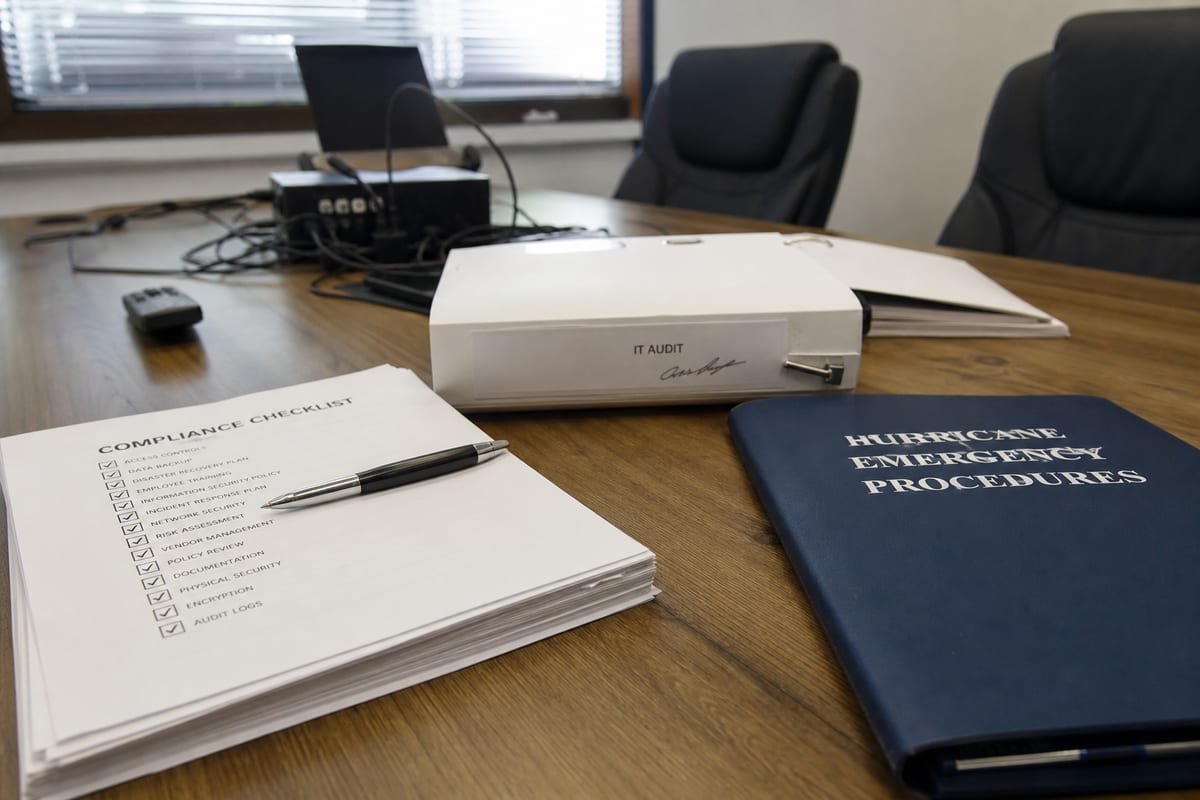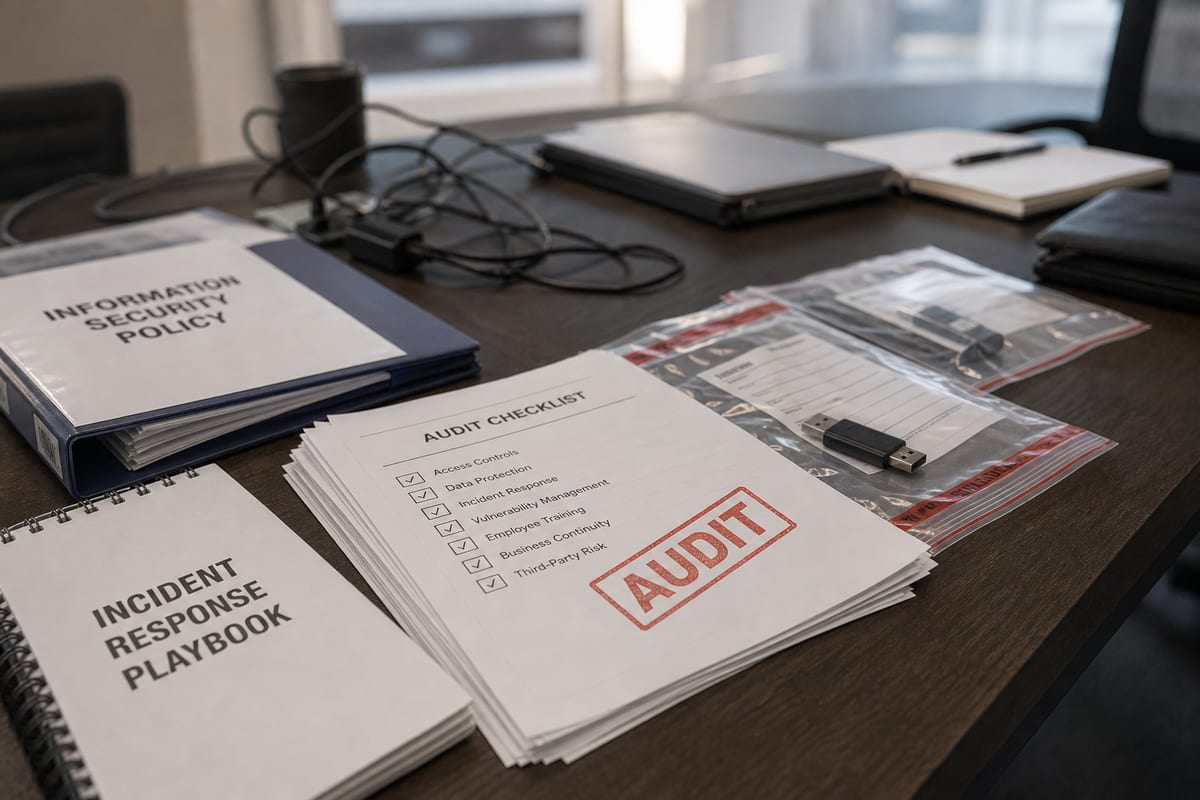

Why Daytona Beach Businesses Need Practical IT Compliance Support
Learn what effective IT compliance support looks like for Daytona Beach businesses, from risk reviews to documentation and staff training.
Published on · Craig Wheeler · How this article was made
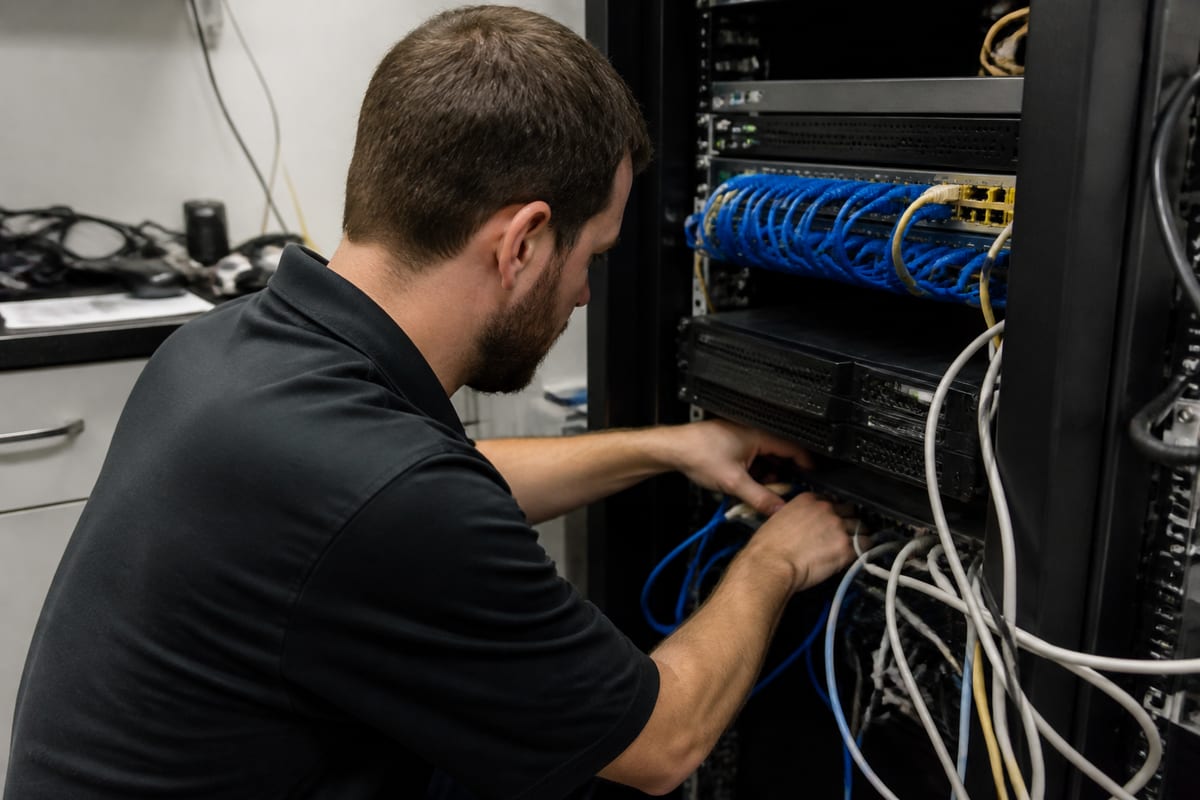
Compliance can feel abstract until a customer questionnaire lands in your inbox, an insurance renewal asks harder questions, or an auditor wants proof instead of promises. For many businesses in Daytona Beach, the challenge is not understanding that compliance matters. It is knowing how to turn broad requirements into everyday technical practices that actually hold up under review.
Good IT compliance support helps close that gap. It connects policies, systems, documentation, and staff behavior so your business is not scrambling every time a requirement changes or a partner asks for evidence.
Compliance is more than a checklist
A lot of companies start with the wrong assumption, that compliance is mainly about passing an annual review. In reality, most frameworks and contractual requirements are looking for consistency. They want to see that access is controlled, sensitive data is handled properly, backups are tested, devices are managed, and incidents are documented.
That means a strong compliance program is built into normal operations. It affects how new employees are onboarded, how laptops are secured, how vendors are evaluated, and how quickly unusual activity is investigated. This is where compliance support services become useful, because they help translate requirements into repeatable processes instead of one-time cleanup projects.
Why this matters in Daytona Beach
Daytona Beach has a business mix that makes compliance especially practical, not theoretical. Healthcare practices, professional services firms, hospitality groups near the Speedway and beachfront, and manufacturers tied to the broader Volusia County economy often handle payment data, personal information, or regulated records. Bethune-Cookman University, Embry-Riddle, and the area’s motorsports ecosystem also contribute to a local environment where research data, vendor relationships, and contractual security expectations are common.
In other words, many organizations here are not dealing with just one standard. They may need to satisfy a blend of client security questionnaires, cyber insurance controls, payment card requirements, privacy expectations, and industry-specific rules. Support should reflect that reality.
Where businesses usually run into trouble
Most compliance problems do not begin with a dramatic breach. They usually start with smaller gaps that have been ignored for too long.
Common examples include:
- Shared user accounts that make activity impossible to trace
- Former employees who still have access to cloud systems
- Security tools that are installed but not consistently monitored
- Policies that exist on paper but do not match actual workflows
- Backups that run automatically but have never been tested for recovery
- Vendor risk reviews that are skipped because no one owns the process
- Staff training that is too generic to change day-to-day behavior
None of these issues are unusual. The real risk comes when several of them stack together. A business might look secure from the outside while lacking the evidence and controls needed to demonstrate that security under scrutiny.
What effective support should include
Useful support is not just a binder of templates. It should help your team understand what applies to your business, what is already in place, what is missing, and what needs to be documented.
A practical engagement often includes:
A clear assessment of current risk
Before making recommendations, your provider should review your environment, data flows, user access, endpoint protections, backup approach, cloud configuration, and existing policies. The goal is to identify gaps that matter, not to overwhelm you with every possible best practice.
Documentation that matches reality
Policies are important, but they only help when they reflect the way your business actually works. If your written procedures say one thing and your staff does another, you are creating audit problems and operational confusion at the same time.
Technical controls that support the policy
If a policy requires multi-factor authentication, logging, encryption, or least-privilege access, those controls should be implemented and verified. This is where close coordination with your IT support team matters, because compliance is only credible when the technology supports it.
Ongoing review, not one-time remediation
Requirements change. Staff changes. Systems change. Vendors change. Compliance support should include periodic reviews so your controls and documentation keep pace with the business.
The role of evidence
One of the biggest misunderstandings around compliance is the idea that saying the right things is enough. It usually is not. Auditors, customers, insurers, and regulators often want evidence.
That evidence may include:
- Access review records
- Security awareness training logs
- Incident response documentation
- Backup test results
- Device inventory reports
- Change management records
- Vendor assessments
- Password and authentication settings
If collecting this information feels difficult, that is often a sign your processes need to be simplified. Good support does not just help you create evidence. It helps you build systems that naturally produce it.
Different frameworks, same operational habits
Your business may be dealing with HIPAA, PCI-related obligations, insurance questionnaires, state privacy expectations, or customer-driven security requirements. While the details vary, the day-to-day habits behind them are often similar.
Most organizations need to focus on a core set of fundamentals:
- Knowing where sensitive data lives
- Limiting access based on job role
- Securing endpoints and cloud accounts
- Training employees to spot common threats
- Maintaining reliable backups and recovery procedures
- Documenting incidents and response steps
- Reviewing vendors that can affect data security
- Keeping policies current and usable
This is why a focused security risk assessment process can be so valuable. It helps separate real gaps from assumptions and gives leadership a clearer picture of what should be fixed first.
Choosing support that fits your business
Not every company needs the same level of structure. A small medical office, a multi-location hospitality group, and a growing professional services firm will all have different risk profiles and documentation needs.
When evaluating providers, ask questions like:
- Do they explain requirements in plain language?
- Can they prioritize issues based on business impact?
- Will they help align technical controls with written policies?
- Do they support evidence collection and audit preparation?
- Can they work with your internal team and outside vendors?
- Are they focused on sustainable processes, not just passing one review?
The best partner should reduce confusion, not add to it.
Building a compliance program your team can live with
The most successful compliance efforts are realistic. They take into account how your employees work, what systems you rely on, and what resources you actually have. A process that looks perfect on paper but is ignored in practice is not a strong control.
That is why implementation matters as much as planning. Staff need clear expectations. Managers need ownership. Leadership needs visibility into risk. Technical teams need standards they can enforce consistently. And the business as a whole needs a roadmap that balances urgency with practicality.
For many organizations, the right next step is not a massive overhaul. It is a structured review, a prioritized action plan, and steady follow-through with compliance support services.
FAQ
What does IT compliance support usually cover?
It typically includes reviewing your current controls, identifying gaps, helping with policies and procedures, improving technical safeguards, preparing documentation, and supporting audit or questionnaire readiness.
Is compliance support only for heavily regulated industries?
No. Even businesses outside highly regulated sectors often face customer security questionnaires, cyber insurance requirements, payment data obligations, or contractual security expectations.
How often should a business review its compliance posture?
At minimum, review it annually and whenever there are major changes to systems, staffing, vendors, or business operations. More frequent reviews are often helpful for growing organizations.
Can a business be secure but still fail a compliance review?
Yes. A company may have decent technical protections but weak documentation, inconsistent processes, or missing evidence. Compliance depends on both controls and proof.
What is the first step if we are not sure where we stand?
Start with a gap assessment. That gives you a practical baseline, shows which requirements apply, and helps you prioritize improvements without guessing.
Compliance works best when it becomes part of how your business operates, not a separate project that only appears during audits. When your systems, policies, and daily habits support each other, reviews become easier and risk becomes easier to manage.
If your business in Daytona Beach is trying to make sense of requirements, documentation, and technical controls, the right support can bring structure to the process and help your team move forward with confidence.
Contact us today for expert it compliance support services!