

Is Your Business Ready for the Compliance Test You Did Not See Coming?
Cybersecurity compliance services help businesses reduce risk, prepare for audits, and respond faster when security issues arise.
Published on · Craig Wheeler · How this article was made
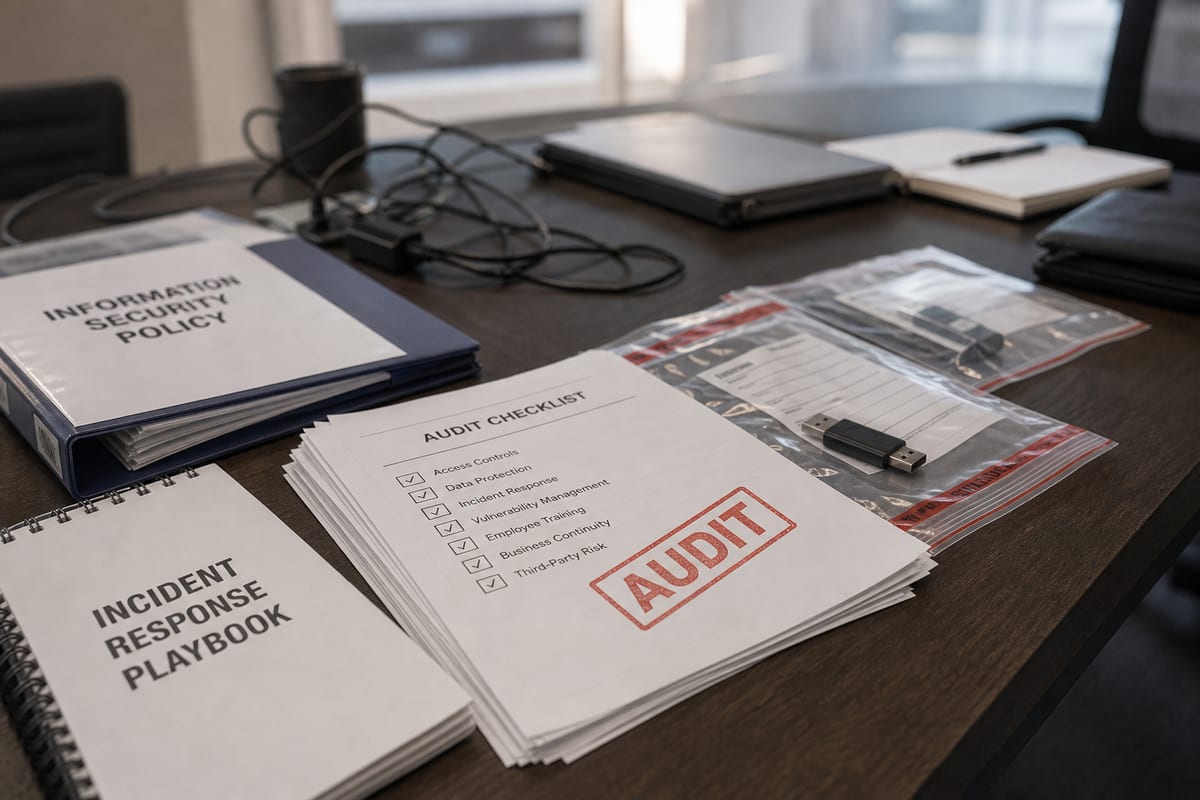
A Monday morning email lands in your inbox. A customer wants proof that your company handles sensitive data responsibly before they sign a new contract. At nearly the same time, your insurance renewal asks sharper questions about security controls, access policies, and incident response. Then someone on your team mentions a suspicious login alert from the weekend.
Nothing catastrophic has happened, at least not yet. But in a few minutes, compliance stops feeling like paperwork and starts feeling very real.
That is the moment many businesses realize cybersecurity compliance is not just about passing an audit. It is about being able to answer basic, high-stakes questions with confidence: What data do we have? Who can access it? How do we protect it? If something goes wrong, what do we do next?
When compliance becomes an operational issue
For a lot of growing companies, security requirements arrive in pieces. A client asks about policies. A vendor questionnaire gets more detailed. Cyber insurance standards tighten. Leadership wants reassurance that the business is not exposed. Over time, those requests pile up into a bigger issue, one that touches technology, processes, people, and documentation.
That is where cybersecurity compliance services can help. Done well, they do more than hand you a checklist. They help you understand which requirements apply to your business, where your current gaps are, and how to build practical processes your team can actually follow.
A good compliance effort usually includes a mix of technical review, policy guidance, risk prioritization, and ongoing support. It connects the real state of your systems with the written expectations from customers, insurers, regulators, or industry frameworks.
Beyond passing an audit

It is easy to think of compliance as a finish line. In reality, it works better as a management discipline.
If your business treats compliance as something to scramble through once a year, you may end up with documents that look polished but do not reflect daily operations. That creates risk. A written policy that says one thing while your systems and habits do another can become a problem during an audit, after a breach, or during a contract review.
Stronger compliance support helps align those pieces. It can include access control reviews, device and patch management checks, backup validation, user training, vendor risk questions, and incident response planning. It can also help you document what is already working, which matters because many businesses are doing more right than they realize, they just have not organized the evidence.
For companies that need a clearer starting point, a cybersecurity risk assessment often helps identify the most important gaps before turning them into a formal compliance roadmap.
The pressure is not only internal
External expectations are one reason this work has become more urgent. Customers increasingly want proof that their partners take security seriously. Insurance carriers want more than yes or no answers. Regulators expect prompt action when personal information is involved.
In Florida, that urgency is especially important. The Florida Information Protection Act, Fla. Stat. 501.171, requires businesses to notify affected individuals within 30 days of discovering a breach involving personal information, with only a limited extension available for good cause. That is a short window when you are still trying to understand what happened, contain the issue, and coordinate communications.
Compliance support cannot guarantee that incidents will not happen. It can, however, make your response far more organized. When policies are current, responsibilities are defined, and systems are better documented, your team has a much better chance of acting quickly under pressure.
What useful support actually looks like
The most helpful compliance services are practical, not theatrical. They should meet your business where it is.
For one company, that might mean cleaning up identity and access controls, formalizing onboarding and offboarding, and documenting an incident response process. For another, it might mean mapping security controls to customer requirements, preparing for a third-party review, or improving evidence collection so audits are less disruptive.
Useful support often includes:
- Reviewing the systems and data that matter most
- Identifying which compliance obligations or frameworks are relevant
- Finding gaps between current practices and required controls
- Prioritizing fixes based on risk and business impact
- Helping create or refine policies that match real operations
- Building a repeatable process for reviews, updates, and documentation
The key is that the work should fit your environment. A small business with a lean internal team does not need the same level of complexity as a large enterprise. What it does need is clarity, consistency, and a plan that can be maintained.
In the Daytona Beach area, local businesses face the same questions
Businesses throughout the Daytona Beach area are dealing with the same shift. Clients are asking harder questions, and security expectations are showing up earlier in the sales process. For many organizations, compliance has become part of doing business, not a niche concern reserved for heavily regulated industries.
That is one reason many companies look for compliance support services that can translate technical issues into business decisions. The goal is not to bury your team in jargon. It is to help you understand what matters now, what can wait, and how to make steady progress without losing momentum on day-to-day operations.
A better way to think about readiness
Compliance readiness is not about having perfect systems or a binder full of untouched policies. It is about being able to show that your business understands its risks, applies reasonable safeguards, and can respond in a disciplined way when something changes.
That kind of readiness tends to improve more than audit outcomes. It can support customer trust, streamline vendor reviews, reduce confusion during incidents, and give leadership a clearer view of where security investments are actually needed.
If you are not sure where your business stands today, starting with a conversation can be more useful than guessing. You can schedule a cybersecurity strategy call to talk through your current requirements, risks, and next steps.
Compliance work is easiest to manage before it becomes urgent. A steady, realistic approach can help you avoid last-minute scrambles, reduce avoidable risk, and make security expectations feel more manageable.
If your team is juggling customer demands, policy questions, and growing security responsibilities, you do not have to sort it all out alone. Reach out to our team to learn how we can help with cybersecurity compliance.